Monitoring Charter Party Performance with navIQore
navIQore's new Charter Party Agreement module connects structured, vessel-specific contract terms with a visual operational timeline, comparing speed, consumption, and weather limits against observed performance across scheduled and ad-hoc conditions alike.
- Context
- CPA
A charter party defines how a vessel is expected to perform, but once a voyage is under way those contractual expectations tend to live apart from the operational data needed to evaluate them — clauses in a document, measurements in a monitoring system, and the changes in operating conditions in between reconstructed by hand. navIQore's new Charter Party Agreement (CPA) module brings that context together in one place.
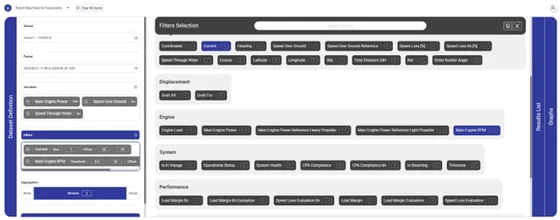
Users can create a contract for a selected vessel, identify the charterer, and configure the terms that matter operationally: vessel status (at sea, at port idle, or at port working), loading condition, operating mode, speed and its allowable margin, fuel-oil consumption and its margin, and wind and wave-height limits. The module monitors these parameters against observed performance and against the instructed speed read directly from the vessel's noon reports for the relevant term — a design choice that makes the comparison reliable across both scheduled charter conditions and ad-hoc instructions issued mid-voyage, rather than only the clean case set out in the original contract.
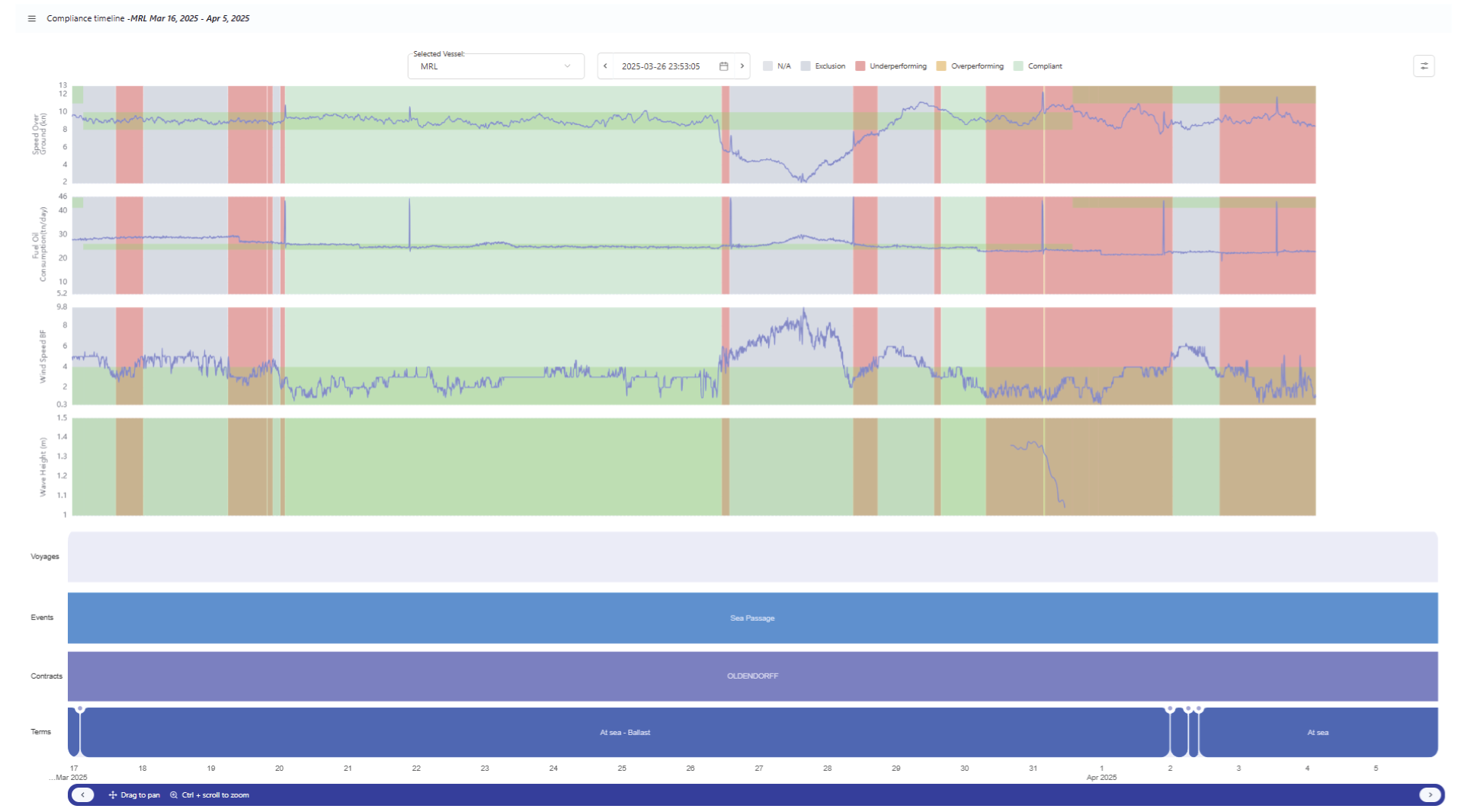
The Compliance Timeline places voyages, voyage legs, contract periods, vessel events and CPA term changeovers on a shared time axis, with speed, fuel consumption, wind and wave data plotted above and compliance-status and margin overlays added for context — so a deviation can be read directly against the term and conditions that applied at that moment, rather than checked separately against a contract on file. Term changeovers can be created, repositioned or removed directly on the timeline, with every change staged for review before it is saved.
By combining structured contract administration with vessel-performance context, the CPA module gives commercial and operational teams a shared reference: what the agreement required, what conditions the vessel encountered, and which term applied at each stage of the voyage — reducing the manual cross-checking that charter-party review has traditionally required.