Introducing navIQore: Turning Vessel Data into Actionable Insight
Konnecta launches navIQore, a platform for bringing together vessel data, digital-twin models and operational applications, developed through Konnecta's leading technical role in the EU-funded DT4GS project — and validated across four DT4GS Living Labs spanning tanker, container, ROPAX and bulk-carrier operations.
- Context
- DT4GS
- Project
- DT4GS
Konnecta launches navIQore, a new platform for bringing together vessel data, digital-twin models and operational applications within a common environment.
navIQore builds on Konnecta’s long-standing expertise and existing assets in vessel telemetry, maritime data processing and performance analysis. Its development was accelerated through Konnecta’s leading technical role in the DT4GS project, where we designed and implemented key elements of a vessel digital-twin architecture connecting onboard data with shore-based services.
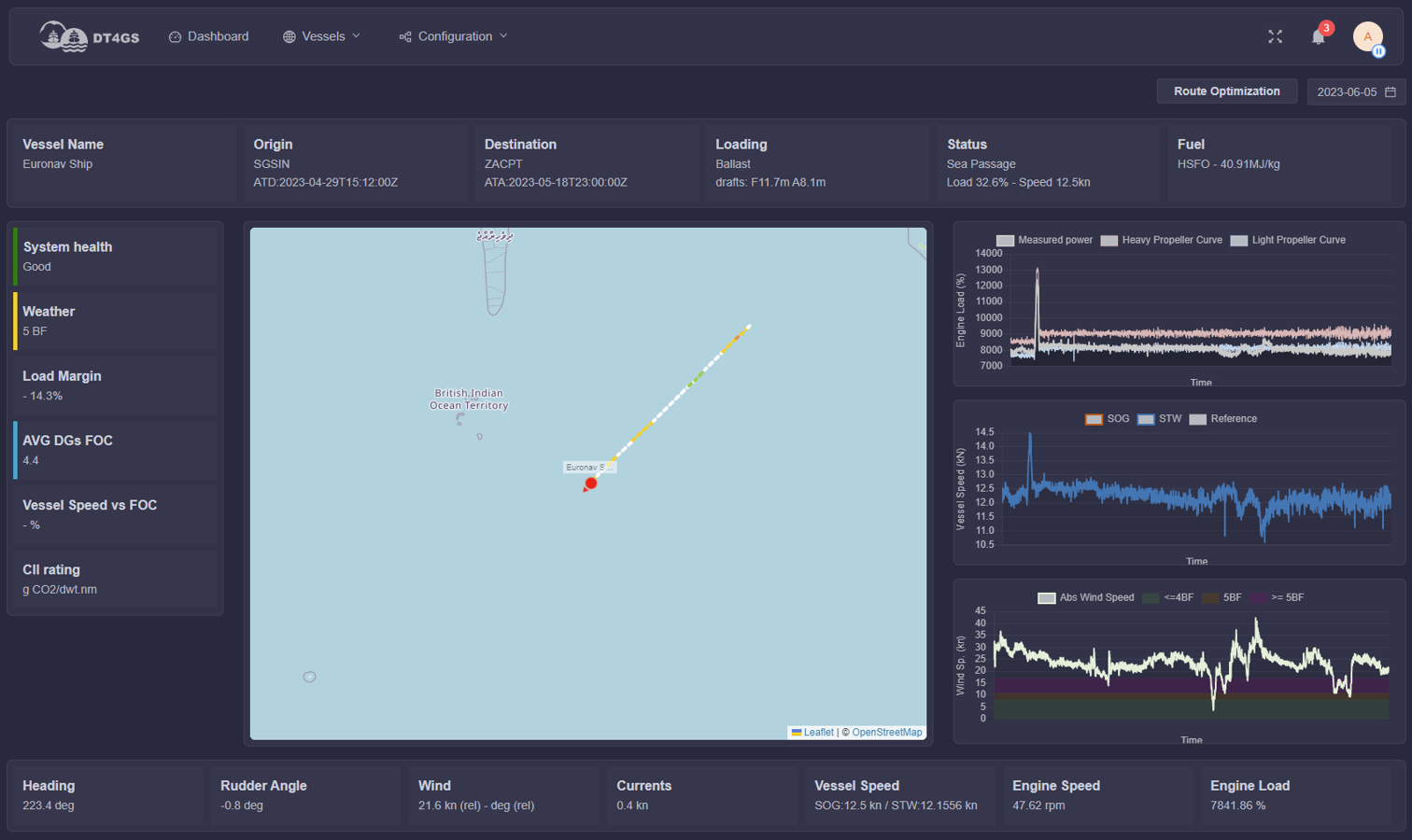
This work enabled navIQore to combine high-frequency vessel telemetry, operational and voyage information, weather data and analytical models. The platform supports data harmonisation, automated quality checks, model execution and the presentation of data and results through a unified user interface.
Within DT4GS, navIQore was deployed and validated across four Living Labs, each built around a different vessel type and operating partner: a Very Large Crude Carrier (VLCC) tanker operated by Euronav, a Panamax containership operated by DANAOS, an LNG dual-fuel ROPAX ferry operated by Baleària, and a Newcastlemax dry bulk carrier operated by Star Bulk. Konnecta's engineering team built and hosted the digital-twin instance for each Living Lab, ingesting high-frequency telemetry, noon-report data and Alarm Monitoring System signals into a common pipeline, and delivering a tailored set of monitoring and analysis applications for each vessel type:
- Tanker (Euronav, VLCC, 299,421 DWT, built 2015): hull and propeller performance monitoring against an ISO 19030-based fuel-consumption baseline, voyage and just-in-time arrival planning, and a wind-assisted-propulsion (Flettner rotor) feasibility simulator.
- Containership (DANAOS, Panamax, 50,697 DWT): data-driven weather-routing optimisation and predictive-maintenance event recognition for hull and machinery degradation, integrated alongside DANAOS's existing fleet-performance systems.
- ROPAX ferry (Baleària, 7,330 DWT, 1,000 passengers / 484 vehicles, built 2002, retrofitted to LNG dual-fuel propulsion in 2020): machinery performance and predictive-maintenance monitoring, energy-management and cooling-system optimisation, and weather-aware voyage optimisation within the tight schedule constraints of short-sea ferry operation.
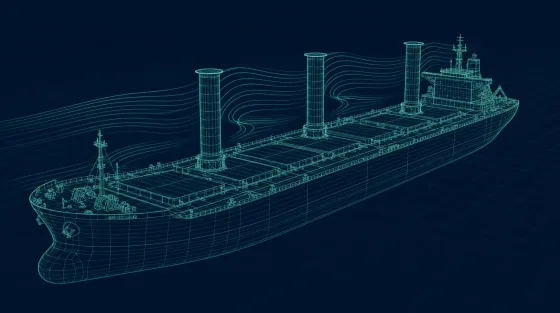
- Bulk carrier (Star Bulk, Newcastlemax, 209,472 DWT, built 2015): hull and propeller degradation tracking supported by AI-assisted underwater inspection, engine-cooling-system optimisation, and the same wind-assisted-propulsion feasibility simulator validated on the tanker.
Together, the four Living Labs created a broad validation base spanning tanker, container, ferry and bulk-carrier operations. Through navIQore, the technical work developed within DT4GS is transformed into a practical and extensible platform that can support vessel monitoring, performance analysis and new digital-twin applications across real fleet operations.